



 Home > Project Case > In Asia>Waste Plastic, Tyre Pyrolysis & Waste Oil Recycling Projects in Indonesia | DOING ECO-Company
Waste Plastic, Tyre Pyrolysis & Waste Oil Recycling Projects in Indonesia | DOING ECO-Company
In Asia / Date:July 7, 2026
Indonesia has become one of the fastest-growing markets for waste recycling and resource recovery in Southeast Asia. With abundant waste plastics, waste tyres, used engine oil, coconut shells, palm biomass, and increasing industrial fuel demand, more investors are choosing pyrolysis and recycling technologies to convert waste into valuable products.
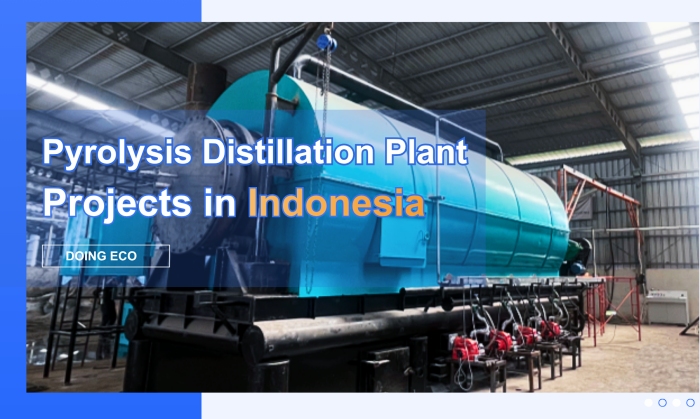 Pyrolysis distillation plants installed in Indonesia
As one of the leading waste recycling pyrolysis plant manufacturers, Henan DOING Company has successfully supplied various recycling equipment to Indonesian customers over the years, including waste plastic pyrolysis plants, tyre pyrolysis plants, waste oil distillation plants, biomass carbonization machines, and integrated plastic-to-diesel-and-gasoline systems.
Below are some representative projects completed in Indonesia.
| Project Type | Representative Projects | Final Products |
| Plastic Pyrolysis | 2 | Fuel oil, diesel, gasoline |
| Tyre Pyrolysis | 3 | Pyrolysis oil, carbon black, steel wire |
Biomass Pyrolysis Carbonization Pyrolysis (Coconut shells, palm waste) | 1 | Charcoal/Biochar |
| Waste Engine Oil Distillation | 1 | Non-standard diesel |
DOING Company provides customized waste to fuel/diesel recycling solutions for different industries while meeting customers' requirements for production efficiency, fuel quality, environmental protection, and long-term operating stability.
Table of Contents
1. DOING Plastic Pyrolysis Projects in Indonesia
2. DOING Waste Tyre Pyrolysis Projects in Indonesia
3. DOING Biomass Pyrolysis Carbonization Projects
4. DOING Waste Oil Distillation Projects
5. Steps of Building a Waste to Fuel Recycling Plant in Indonesia
6. Why Choose DOING Company?
7. Frequently Asked Questions
1. DOING Plastic Pyrolysis Projects in Indonesia
Indonesia's rapidly expanding manufacturing industry and growing plastic consumption generate large quantities of waste plastic every year. Instead of sending these materials to landfills, many companies are investing in plastic pyrolysis technology to convert waste plastics into valuable fuel oil, diesel, and gasoline.
Compared with traditional waste disposal methods, plastic pyrolysis offers higher resource utilization, lower environmental impact, and attractive economic returns. Depending on customers' production requirements, DOING Eco-Company provides batch, semi-continuous, fully continuous, and integrated plastic-to-fuel systems.
The following projects illustrate how Indonesian customers have adopted different technical solutions to achieve their recycling goals.
June 2026 | Integrated Plastic-to-Diesel & Gasoline Project for an Automotive Parts Manufacturer
In June 2026, DOING Company signed a cooperation agreement with an Indonesian automotive parts manufacturer for one set of integrated plastic-to-diesel-and-gasoline machine.
Unlike conventional pyrolysis projects that only produce pyrolysis oil, this customer required higher-quality finished fuel with improved stability and broader application possibilities. After understanding the customer's production process, DOING recommended an integrated solution combining plastic pyrolysis with advanced fuel refining technology. The recovered diesel and gasoline are mainly used for protective oil coating during automotive parts production, helping reduce the customer's fuel purchasing costs while improving waste plastic utilization.
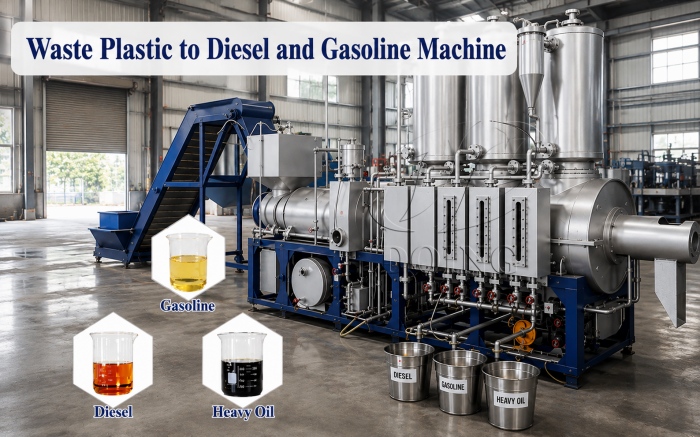 Plastic to diesel and gasoline plant
August 2025 (Installed in May 2026) | 10TPD Batch Plastic Pyrolysis Plant
Another Indonesian customer invested in a 10TPD batch plastic pyrolysis plant after comparing equipment from several suppliers. The customer mainly processes mixed waste plastics collected from local recycling channels and converts them into industrial fuel oil for nearby factories.
During equipment selection, the customer paid particular attention to equipment reliability, investment cost, and ease of operation. After several rounds of technical discussions, DOING recommended a batch pyrolysis system that provides an excellent balance between investment budget and production efficiency. The project was successfully installed and commissioned in May 2026 and has operated stably since then. Checking the 10TPD plastic pyrolysis plant in Indonesia installation video here:
2. DOING Waste Tyre Pyrolysis Projects in Indonesia
With the rapid growth of vehicle ownership and industrial transportation, Indonesia generates an increasing number of waste tyres every year. These discarded tyres occupy large amounts of land, are difficult to decompose naturally, and may create serious environmental and fire hazards if improperly managed.
Pyrolysis technology provides an effective solution by converting waste tyres into valuable products, including pyrolysis oil, recovered carbon black, steel wire, and combustible gas. Depending on production capacity and investment plans, DOING offers batch, semi-continuous, and fully continuous tyre pyrolysis systems.
The following projects represent several successful tyre recycling plants supplied by DOING in Indonesia.
June 2024 | 15TPD Semi-continuous Waste Tyre Pyrolysis Plant
To increase production efficiency while maintaining reasonable investment costs, one Indonesian customer selected DOING's 15TPD semi-continuous waste tyre pyrolysis plant.
Compared with traditional batch equipment that normally completes one production cycle per day, the semi-continuous design significantly improves throughput and can achieve approximately three production cycles every two days.
Before entering the reactor, waste tyres are cut into suitable sizes and steel wires are removed, making the feeding process cleaner, safer, and more efficient. For medium-sized recycling enterprises, semi-continuous pyrolysis equipment provides an excellent balance between investment cost and production capacity.
September 2023 | Two Sets of 10TPD Waste Tyre Pyrolysis Plants for an Industrial Park
A customer managing an industrial park needed to recycle large quantities of abandoned waste tyres that had accumulated over many years.
After evaluating several equipment manufacturers, the customer finally selected DOING based on our mature overseas project experience, proven environmental protection technology, and strong international reputation.
Two sets of 10TPD tyre pyrolysis plants were installed to process waste tyres generated within the industrial park. The recovered pyrolysis oil is sold as industrial fuel, while carbon black and steel wire provide additional revenue streams.
This waste tyre recycling pyrolysis project not only solved a long-standing waste management problem but also created sustainable economic value through resource recycling.
September 2023 | 15TPD Waste Tyre Pyrolysis Plant Recommended by an Existing Customer
Many of DOING's overseas projects are built through long-term customer trust and referrals. In September 2023, an Indonesian customer contacted DOING after being introduced by one of our existing clients who had been satisfied with the equipment performance and after-sales service.
After evaluating the customer's available space, feedstock supply, and fuel application, our engineers recommended a 15TPD batch waste tyre pyrolysis plant equipped with a compact water-tank condensation system. Compared with conventional condensation layouts, this design occupies less installation space while maintaining stable oil condensation efficiency, making it particularly suitable for factories with limited land.
The recovered pyrolysis oil is mainly supplied to the customer's own steel smelting plant as an alternative industrial fuel, reducing fuel procurement costs and improving the overall utilization of waste tyres.
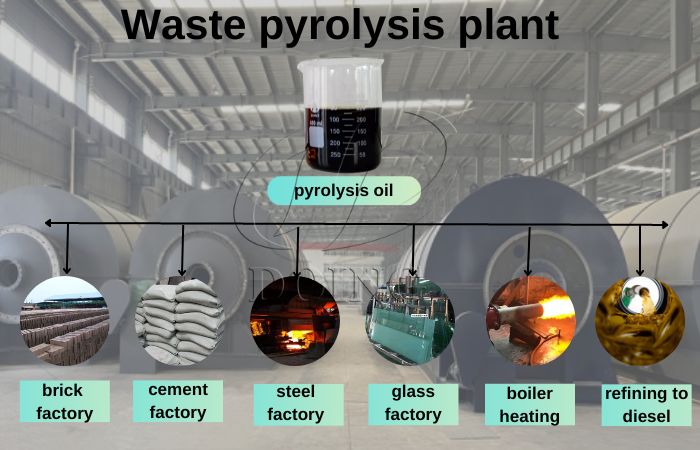 Tyre pyrolysis oil used as industrial fuel
3. Biomass Pyrolysis Carbonization Projects in Indonesia
Indonesia is one of the world's largest producers of palm oil and coconuts. Every year, enormous quantities of agricultural residues—including coconut shells, palm kernel shells, palm fiber, empty fruit bunches (EFB), bamboo, and wood waste—are generated during agricultural processing.
Instead of being discarded or openly burned, these biomass resources can be converted into high-value charcoal or biochar through carbonization technology, creating additional revenue while reducing environmental impact.
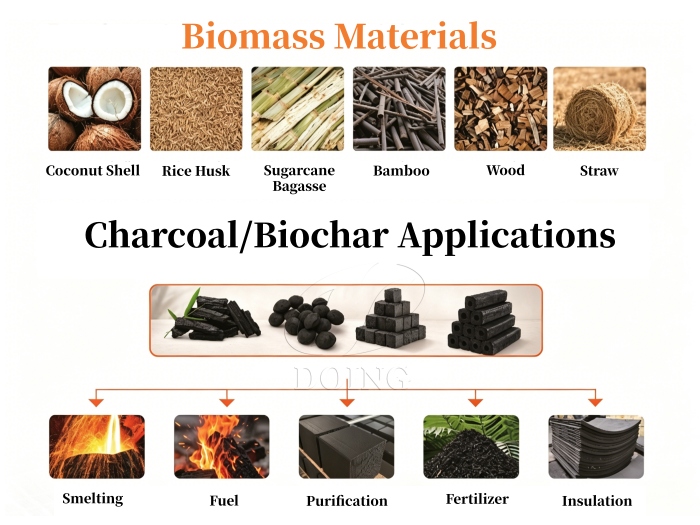 Biomass to biochar pyrolysis business
July 2025 | Indonesian Customer Purchased 1T/H Biomass Carbonization Plant
In July 2025, an Indonesian customer visited DOING's manufacturing base to inspect a 1T/H biomass carbonization machine before placing an order.
The customer mainly processes coconut shells and palm processing residues generated by local agricultural industries.
After carbonization, the charcoal products can be used for: Industrial fuel, Barbecue charcoal, Activated carbon production, Soil improvement (biochar), Metallurgical applications.
During the factory visit, DOING's engineering team introduced the equipment manufacturing process, operating principles, project references, and customized solutions based on the customer's raw materials and production goals.
4. Waste Oil Distillation Projects in Indonesia
Besides waste plastic and tyre recycling, used engine oil regeneration has become another attractive investment opportunity in Indonesia. Large quantities of waste lubricating oil are generated every year by transportation companies, vehicle maintenance centers, mining operations, construction machinery, and industrial factories.
Instead of disposing of waste oil or using it as low-value fuel, modern distillation technology allows investors to recover higher-value non-standard diesel that can be reused in industrial applications, significantly improving the economic value of waste oil recycling.
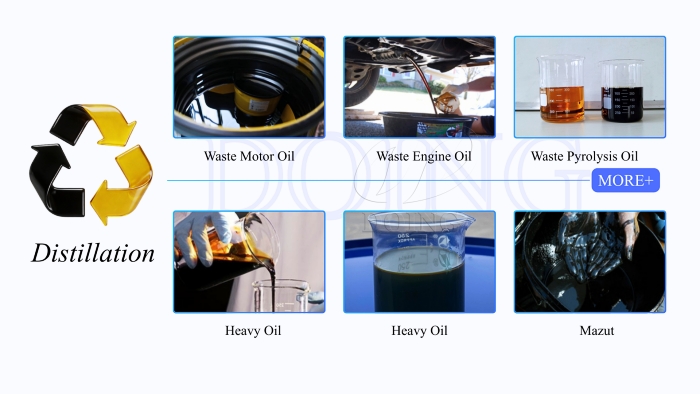 Waste oil distillation diesel plant feedstocks
June 2022 | 15TPD New Generation Waste Oil Distillation Plant
In 2022, an Indonesian customer invested in DOING's 15TPD new-generation waste oil distillation plant to recycle used engine oil collected from local industrial users.
Unlike traditional acid-clay refining methods, this project adopts solid catalyst technology, which helps improve diesel recovery while reducing chemical consumption and minimizing manual intervention during operation.
The recovered non-standard diesel is mainly supplied to local industrial users as an alternative fuel, creating stable long-term economic returns.
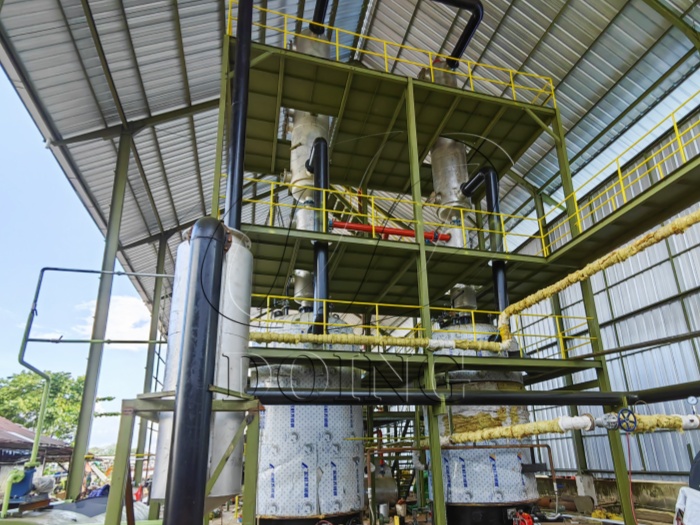 Recycling waste engine oil to diesel distillation machine in Indonesia
5. How to Successfully Build a Waste to Fuel Recycling Plant in Indonesia?
Building a successful waste to fuel recycling project requires more than selecting suitanle pyrolysis distillation equipment. A well-planned project should consider raw material supply, product demand, factory layout, environmental protection, and long-term operating efficiency.
DOING typically assists customers through the following stages:
Step 1 – Evaluate Available Feedstock
Analyze the type, quantity, and stability of locally available waste materials.
Step 2 – Define End Products
Determine whether the project will produce fuel oil, diesel, gasoline, carbon black, charcoal, biochar, or a combination of products.
Step 3 – Select the Appropriate Equipment Configuration
Choose the most suitable batch, semi-continuous, fully continuous, or integrated refining solution based on production capacity and investment budget.
Step 4 – Complete Factory Planning
Design equipment layout, utility systems, storage areas, and environmental protection facilities according to actual site conditions.
Step 5 – Installation and Commissioning
DOING's engineers provide installation guidance, equipment commissioning, operator training, and technical support to ensure stable plant operation.
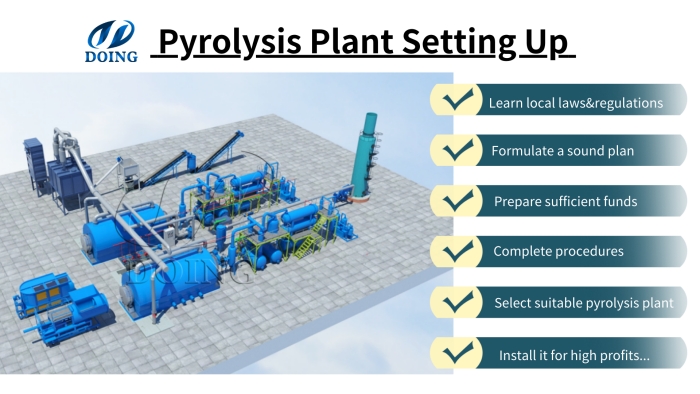 Waste pyrolysis plant setting-up steps
6. Why Choose DOING ECO-Company?
DOING ECO-Company is not middleman, but a reliable world-leading pyrolysis distillation machine manufacturer&supplier. We have professional marketing, project planning and technical and engineering teams. And we have 40000+㎡ factory area and 60000+㎡ new intelligent manufacturing factory under construction.
From project consultation to commercial production, DOING provides comprehensive engineering support throughout the entire project lifecycle. Our services include: Project feasibility analysis, Equipment selection recommendations, Customized process solutions, Factory layout and 3D design, Manufacturing and quality inspection, Overseas installation guidance, Operator training, Equipment commissioning, Spare parts supply, Lifetime technical support.
With extensive overseas project experience, DOING helps customers reduce investment risks, shorten project implementation time, and achieve stable long-term operation.
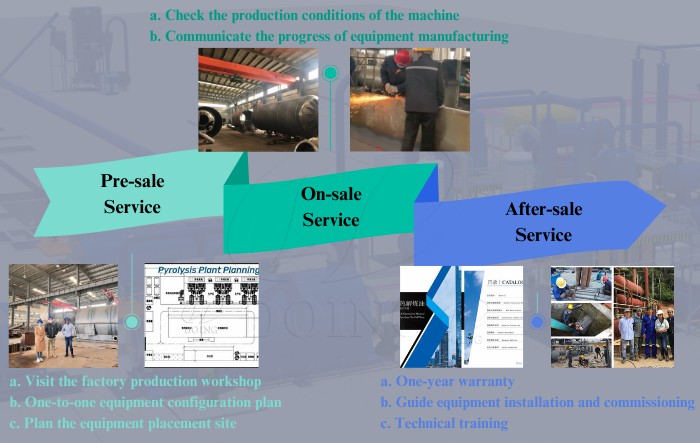 All around services of DOING Company
7. Frequently Asked Questions
· Is pyrolysis plant profitable in Indonesia?
Yes. Establishing a pyrolysis plant in Indonesia offers three major advantages: abundant feedstock resources, strong demand for industrial fuel, and circular economy policies. But the profitability of pyrolysis plant depends on factors such as feedstock costs, product prices, plant capacity, and operating efficiency. With a stable raw material supply and appropriate equipment selection, many investors achieve attractive returns.
· What materials can DOING's pyrolysis equipment process?
Our pyrolysis machine can process waste plastics, waste tyres, rubber products, oil sludge, medical waste (where regulations permit), biomass materials, municipal solid waste fractions, and other suitable organic waste materials.
· Which type of pyrolysis plant is suitable for beginners?
For first-time investors, batch pyrolysis plants are often the most economical choice due to their lower initial investment and simpler operation. As production demand increases, semi-continuous or fully continuous systems can be considered.
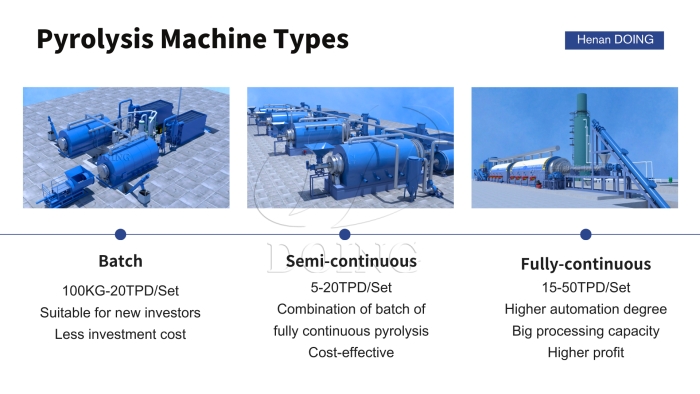 Differences of 3 types of pyrolysis plants
· Can DOING customize equipment for Indonesian customers?
Yes. We customize equipment configurations according to raw materials, production capacity, fuel quality requirements, factory space, local regulations, and customer investment plans.
· Does DOING provide installation service in Indonesia?
Yes. DOING provides overseas installation guidance, equipment commissioning, operator training, and long-term after-sales technical support.
· How long does it take to complete a project in Indonesia?
Project schedules vary depending on equipment type, production capacity, manufacturing progress, shipping arrangements, and site preparation, usually varying from 4-10 months. Our engineering team will provide a detailed implementation plan after confirming project requirements.
Contact DOING for Your Indonesia Project
Over the past several years, DOING-ECO Company has successfully completed a wide range of waste plastic pyrolysis, waste tyre recycling, waste oil distillation, and biomass carbonization projects across Indonesia. These projects demonstrate not only the reliability of our equipment but also the tremendous growth potential of Indonesia's waste recycling and circular economy industries.
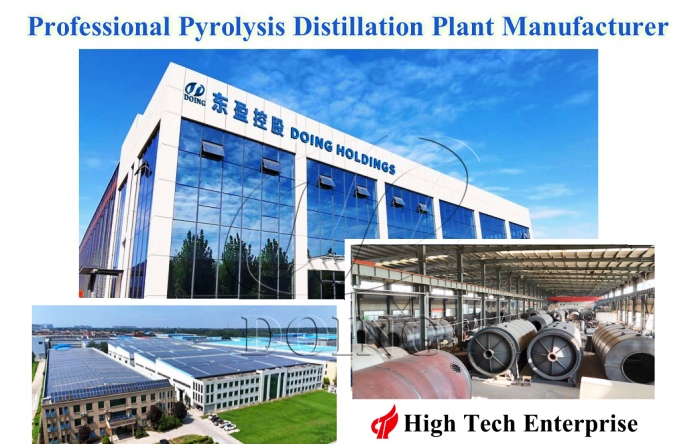 Pyrolysis distillation plant manufacturer DOING ECO
If you are planning to invest in a recycling project in Indonesia, our engineering team is ready to help you evaluate your raw materials, recommend the most suitable equipment configuration, and support you throughout the entire project—from initial planning to successful plant operation.
Request Information
Send your inquiry for further information