


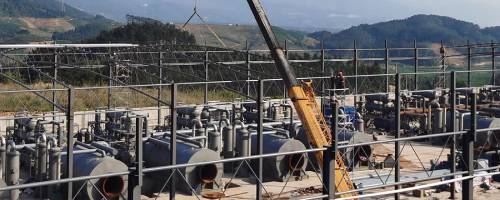

DOING® Medical Waste Pyrolysis Furnace
The healthcare system generates vast quantities of medical waste annually, consisting primarily of waste paper, plastics, bamboo, fibers, leather, rubber, surgical excisions, glassware, and similar materials. The majority of this waste comprises organic hydrocarbons, which can be effectively processed using DOING® medical waste pyrolysis furnace. This process enables the highly efficient resource utilization of medical waste, thereby providing clients with an environmentally sound solution to their waste management challenges.
 DOING® medical waste pyrolysis furnace
Working Principle of the Medical Waste Pyrolysis Furnace:
DOING® medical waste rotary pyrolysis furnace is suitable for processing a wide range of medical waste types—including infectious waste, pharmaceutical waste, and chemical waste—and can also handle other organic waste materials, offering broad prospects for application. This medical waste disposal equipment employs high-temperature thermal pyrolysis technology to transform medical waste into valuable products such as pyrolysis oil (plastic oil), carbon black, and combustible gases.
 Medical waste for disposal and pyrolysis
The pyrolysis oil recovered after processing can be sold directly to various industries—including steel mills, asphalt mixing plants, metal smelters, cement factories, and brickworks—or it can undergo further deep processing using waste oil refining equipment to produce high-quality, non-standard diesel fuel. Exhaust gases generated during the high-temperature pyrolysis process of medical waste are treated via desulfurization and denitrification units to ensure emissions meet regulatory standards; wastewater is directed into the facility's on-site sewage treatment system; and the combustible tail gas produced during the process can be desulfurized and deodorized for reuse as fuel to provide heat for the system.
Overall, the medical waste pyrolysis machine effectively eliminates pathogens and microorganisms within the waste, thereby reducing the infectiousness and associated health risks of medical waste. Furthermore, the pyrolysis system features a sealed, leak-proof, and pollution-preventing design. Ultimately, it yields valuable products while adhering to strict environmental protection principles, representing a medical waste treatment technology with excellent prospects for future development.
Components of the Medical Waste Rotary Pyrolysis Furnace:
1. Pyrolysis System: Medical waste frequently contains a high proportion of rubber and plastic products—such as rubber gloves, rubber tubing, IV bottles, and syringes—which are predominantly composed of PP (polypropylene) and PE (polyethylene) plastics. These materials can be fed directly into the pyrolysis reactor without the need for prior sorting. Following high-temperature pyrolysis at 300–400°C, residual pharmaceuticals are decomposed, while the long-chain polymers within the waste rubber plastic materials are broken down into shorter-chain hydrocarbons. These short-chain compounds can be further decomposed into smaller molecules, such as fuel oil, light hydrocarbons, and gases.
 Medical waste pyrolysis furnace reactor
2. Heating System: DOING® rotary pyrolysis furnace for medical waste treatment features a versatile heating system utilizing hot air furnaces, burners, and tail-gas injection nozzles. Operators can select either indirect or direct heating methods for the reaction vessel. The equipment is brought up to its operating temperature by burning coal, natural gas, or fuel oil, and is further equipped with a thermal insulation system.
3. Cooling System: The cooling system for the medical waste rotary pyrolysis furnace typically employs either a water-tank-type condenser or a shell-and-tube condenser. Additionally, a condensing tower can be installed—or a condensing pool constructed—to ensure that the pyrolytic oil and gas are fully condensed into liquid oil, thereby stabilizing and maximizing the oil yield.
4. Safety System: To facilitate the safe and stable operation of the medical waste pyrolysis furnace, manufacturer Henan DOING® Company has incorporated a suite of safety equipment. This includes buffer tanks (to regulate the flow rate of oil and gas), water seals (to prevent the backflow of tail gas), and vacuum negative-pressure devices (to prevent flash explosions and further enhance oil yield).
5.Waste Gas Treatment System: Due to the presence of pharmaceutical residues in medical waste, the vaporization process generates a complex mixture of flue gases; consequently, the environmental protection requirements for this equipment are particularly stringent. DOING®’s desulfurization anddeodorization towers—along with its dust removal towers—effectively purify the exhaust gas by eliminating harmful gases and pollutants. The treated gas can then be recycled back into the furnace for heating purposes, thereby reducing operating costs while ensuring that flue gas emissions meet all regulatory standards.
 Environmental medical waste recycling machine
Advantages of DOING® Medical Waste Pyrolysis Furnaces:
1. The medical waste disposal pyrolysis equipment is equipped with an automatic feeding system, ensuring personnel safety by allowing all operations to be conducted at ground level, thereby eliminating the hazards associated with working at heights.
2. DOING® medical waste pyrolysis machine features a PLC automatic control system that precisely regulates the equipment's operational rhythm, making it easy to operate.
3. A fully enclosed, automatic slag discharge system eliminates the risks of injury to personnel during slag removal—such as burns from high temperatures—and prevents carbon black leakage, thereby avoiding environmental pollution.
4. Critical components of the medical waste thermal pyrolysis furnace are fitted with pressure gauges, thermometers, and explosion-proof valves to minimize the risk of accidents.
5. The slag discharge system and the gas outlet are separated and operate independently, significantly reducing the likelihood of blockages.
6. The pyrolysis system employs a waste heat purification and circulation loop, utilizing the purified combustible gases as fuel to provide heat for the process.
Different Models of Medical Waste Pyrolysis Furnace For Sale
As a highly efficient technology for the high-temperature pyrolysis treatment of medical waste, the rotary pyrolysis furnace offers distinct advantages in terms of resource recovery and environmental friendliness. DOING's medical waste pyrolysis furnaces are manufactured using mature, proven processes and are available in a variety of models that can be customized to meet specific requirements.
 Different types of medical waste pyrolysis machine
①Batch-type Medical Waste Pyrolysis Machine: This equipment offers strong compatibility regarding the size of raw materials it can process. Available in a diverse range of models, it is an ideal choice for investors establishing small-to-medium-scale pyrolysis plants. Best-selling models include: DY-100KG, DY-500KG, DY-1TPD, DY-5TPD, DY-10TPD, DY-15TPD, etc.
②Semi-continuous Medical Waste Pyrolysis Plant: This system combines the features of both batch-type and fully continuous equipment. It supports automatic feeding and high-temperature slag discharge, achieving an operational efficiency of approximately three batches every two days. Our best-selling models are: DY-S-10TPD, DY-S-15TPD, and DY-S-20TPD.
③Fully Continuous Medical Waste Pyrolysis Equipment: Featuring 24-hour intelligent operation, these systems can run continuously for up to 45 days; while highly efficient and energy-saving, they do entail a slightly higher initial investment cost. Our best-selling models in this category are: DY-C-15TPD, DY-C-30TPD, and DY-C-50TPD.
If you provide more details (e.g., your target capacity, location, or budget), Henan Doing Company can help narrow down the options further or suggest specific models tailored to your medical waste treatment and pyrolysis needs.
Final Products of Medical Waste Treatment Pyrolysis Process
After undergoing recovery and treatment via pyrolysis equipment, medical waste yields the following three core products:
1. Fuel Oil (Primary Product)
This oil possesses a high calorific value and can be utilized directly for boiler combustion, industrial power generation, and as fuel for heavy machinery. It serves both the export market and local energy self-sufficiency needs; given the consistent, long-term demand, marketability is assured.
 Medical waste regenerated pyrolysis oil application
2. Industrial Carbon Black (By-product)
On one hand, it serves as a reinforcing agent for rubber, aids in tire recycling, and acts as a filler for plastic products. On the other, it is utilized in the production of waterproofing materials, asphalt modification, and the processing of black pigments.
3. Combustible Mixed Gas
Generated endogenously during the pyrolysis process, this gas is typically used to self-sustain the heating of the pyrolysis reactor itself or to fuel factory boilers.
Aside from the initial startup phase, the operation incurs virtually no additional fuel costs.
Request Information
Send your inquiry for further information