



 Home > FAQ > Waste Oil Distillation Plant>Can Non-standard Diesel from Waste Oil Distillation Plant Be Sold Legally?
Can Non-standard Diesel from Waste Oil Distillation Plant Be Sold Legally?
Waste Oil Distillation Plant / Date:August 21, 2026
Generally speaking, non-standard diesel recovered from suitable waste oil can be legally sold in some markets. It serves as a cost-effective fuel alternative for factory boilers, heavy machinery, and industrial burners. But its sale and use depend on fuel quality, intended application, and local regulations. It should not be marketed as standard automotive diesel unless it meets the required road-fuel specifications.
At Henan DOING Company, we manufacture waste oil distillation plants that help recyclers process used engine oils, hydraulic oils, and lubrication residues into usable non-standard diesel tailored to local market specifications.
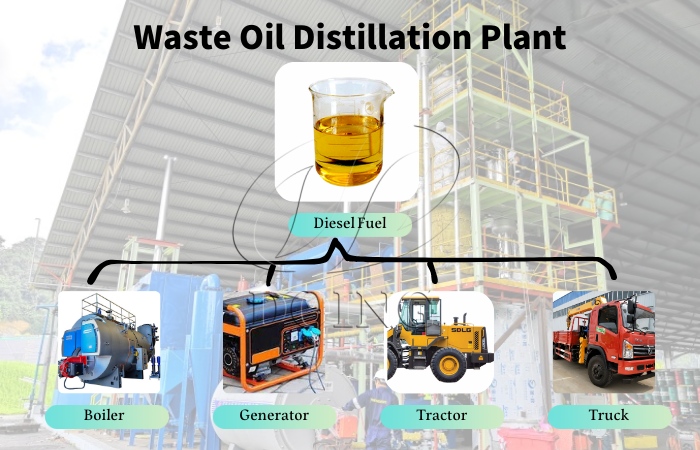 Waste oil distillation machine generated diesel commercial uses
What Is Non-standard Diesel from Waste Oil Distillation?
Non-standard diesel is the diesel obtained from waste oil such as used motor oils, hydraulic oil, and gear lubricants by controlled heating, distillation and catalytic refining processes.
Simply put, the composition of non-standard diesel is not the same as that of standard crude oil diesel:
Road Diesel (Standard Diesel for Vehicles): Legal standards for cetane number, very low sulfur levels, and accurate flash points.
Non-Standard Diese: The properties vary according to the fuel you use. This diesel is meant for heating, industrial applications, or heavy machinery which allows a little give in its engine specifications.
Trying to sell non-standard diesel as regular filling-station fuel is illegal in most jurisdictions. However, selling it under its actual technical specs for industrial heating or heavy-duty use is a completely legal, established market worldwide.
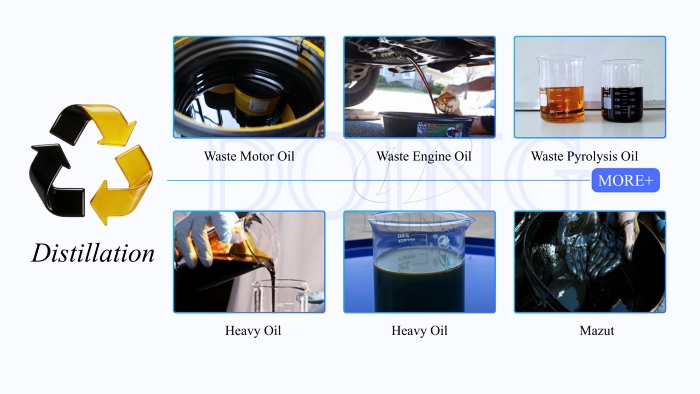 Different sources of raw materials for waste oil refining
What are the legal requirements for selling diesel made from waste oil?
Before setting up renewable diesel sales channels, your business needs to check off three practical requirements:
1. Fuel Quality Testing
Buyers won't take fuel blind. Key metrics like flash point, viscosity, sulfur level, and water content determine who can legally burn your product. Testing batch samples in a certified lab gives you the spec sheet required for commercial sales.
2. Permitted End-Use
Equipment manufacturers and local environmental boards set strict rules on fuel types. Industrial boilers, asphalt mixing plants, and heavy excavators often operate legally on recycled non-standard fuel, whereas light-passenger vehicles do not.
3. Regional Commercial Licensing
Regulations vary by country. You will typically need standard local permits covering environmental waste processing, fuel storage, hazardous material transport, and commercial trading.
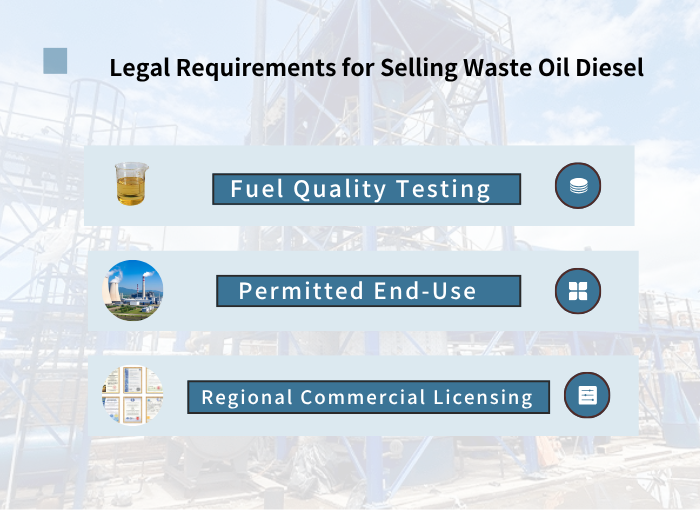 Legal requirements for selling waste oil diesel
Where Can Non-standard Diesel Be Legally Used?
The actual application depends on the fuel properties and local requirements.
| Application / Equipment | Is Legal Sale & Use Permitted? | Notes & Requirements |
| Industrial Boilers & Heaters | Yes | Highly recommended. Excellent burner fuel where permitted. |
| Heavy-Duty Construction Equipment | Generally Yes | Depends on engine age, emissions setup, and local rules. |
| Tractors & Marine Vessels | Conditional | Usually requires blending with higher-grade fuel or secondary refining. |
| Passenger Cars & Motorcycles | No | Strictly prohibited. Will damage high-precision engines. |
The main commercial opportunity for non-standard diesel is therefore usually found in industrial and other permitted fuel applications, rather than direct use in passenger vehicles.
How Is Non-standard Diesel Produced from Waste Oil?
A typical waste oil to diesel distillation process is:
Waste Oil → Pre-treatment (optional)→ Distillation → Catalyzing(only for soild catalyst process)→ Condensation →Neutralization reaction ( only for acid-base catalyst process)- Fuel Collection → Further Purification (optional)→Residue Collection (Asphalt)
Not every project requires all of these stages. The process is selected according to the type and quality of the waste oil and the required fuel quality.
During distillation, the waste oil is heated and separated into different components. The fuel vapors are condensed and collected as recovered fuel, while heavier residue can be collected separately. Additional purification can be added when a cleaner or more stable fuel is required.
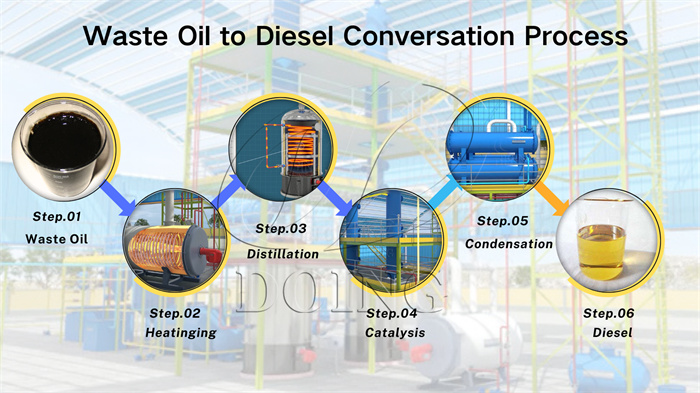 Typical waste oil to diesel distillation process
Under suitable feedstock and operating conditions, diesel yield can reach around 80–85%, although actual yield varies with the composition and water content of the waste oil.
Additional treatment may include:
1. Deodorization and decolorization to improve fuel appearance and odor
2. Further purification to meet specific fuel requirements
3. Gas and flue-gas treatment to control emissions during operatio
What Should You Check Before Selling the Fuel?
If you are planning to invest in a waste oil distillation machine business, we recommend confirming these details early to avoid regulatory or sales hurdles:
1. What type of waste oil is available?
2. What fuel quality can the feedstock and refining process produce?
3. Where will the recovered fuel be used?
4. Who are the potential buyers?
5. What local requirements apply to production, testing, storage, transportation, and sales?
These factors also determine whether additional purification is needed and what type of waste oil distillation plant is appropriate.
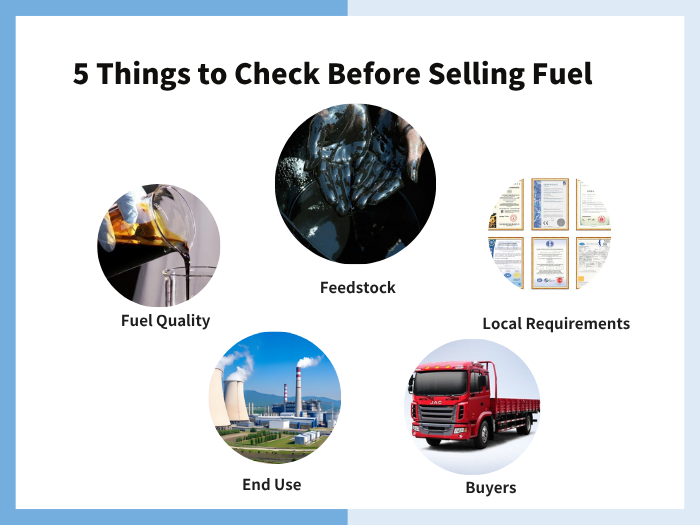 5 key factors to check before selling fuel produced from waste oil
Waste Oil Distillation Plant for Non-standard Diesel
A waste oil distillation plant can recover usable fuel from suitable waste oil, but the commercial value of the product depends on more than its yield.
Non-standard diesel can be sold legally for permitted applications when the fuel meets the relevant quality requirements and local regulations. It should be marketed according to its actual specifications and intended use, rather than being presented as standard automotive diesel.
Henan DOING Company provides waste oil distillation plants designed according to the feedstock, processing capacity, target fuel quality, and intended application. Purification and treatment systems can also be configured according to project requirements.
Henan DOING Waste Oil to Diesel Distillation Project Experience
Henan DOING has delivered waste oil distillation and refining projects in multiple markets worldwide, with project capacities ranging from 100 kg/batch to 30 TPD.
Project Markets
Asia: China, India, Malaysia, Thailand, Mongolia, Philippines, Japan, Kazakhstan
Middle East: Lebanon, United Arab Emirates
Africa: Zambia, Kenya, Nigeria, Ghana, South Africa, Burkina Faso, Egypt, Mali, Democratic Republic of the Congo (DRC)
Europe: United Kingdom, Romania, Italy
North America: Canada, United States, Mexico
Central America & Caribbean: Haiti, Guatemala, Curaçao, Suriname, Jamaica
South America: Ecuador, Colombia, Chile
Oceania: Australia, New Zealand, Fiji
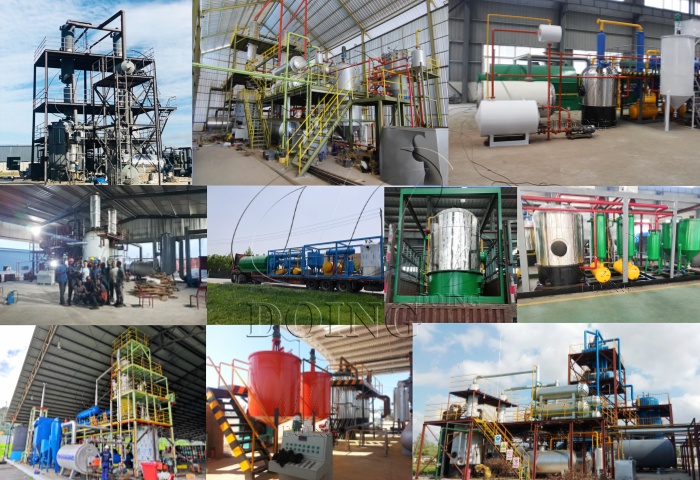 Henan DOING waste oil refining equipment projects in different regions
Services: Equipment selection, manufacturing, quality inspection, shipment, installation, commissioning, operator support and after-sales service.
Request Information
Send your inquiry for further information